Maximizing Your Design Potential with Bright Preppy Leaves Digital Paper
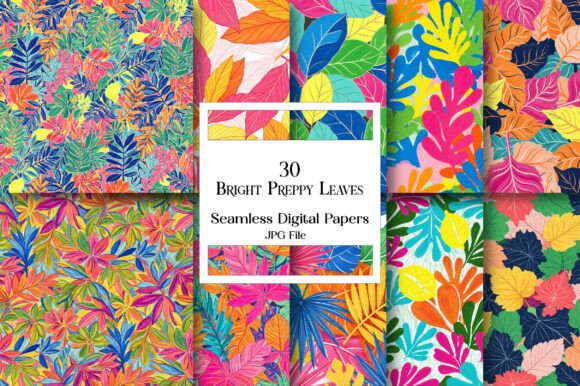
There is a distinct energy that comes from combining bold botanical elements with a modern, preppy aesthetic. When you are looking to inject life into a stagnant brand or refresh a personal project, the Bright Preppy Leaves Digital Paper collection offers exactly that kind of vibrant lift. However, simply downloading a pack of seamless patterns is only the first step. Many creators, from seasoned graphic designers to enthusiastic hobbyists, often stumble not because the assets lack quality, but because they misunderstand how to integrate high-energy patterns effectively into a cohesive design strategy.
This collection features colorful leafy motifs and trendy organic patterns designed to be eye-catching. Yet, the very attributes that make these designs stand out—their brightness, boldness, and playful nature—can become liabilities if applied without forethought. To get the most out of these digital papers, you need to approach them with a clear understanding of scale, context, and technical requirements.
Avoiding the Trap of Visual Overload
The most common mistake when working with vibrant, nature-inspired details is assuming that "more is better." Because the Bright Preppy Leaves Digital Paper set is packed with personality and color, there is a temptation to let the pattern dominate the entire canvas. When you cover a large surface area, such as a full website background or an entire sheet of wrapping paper, with a high-contrast, busy botanical print without considering negative space, the result can feel chaotic rather than chic.
This visual noise affects communication. If your goal is branding or creating stationery where text needs to be read, a loud background can render your message illegible. The solution lies in strategic placement. Instead of using the pattern as a full-bleed background for text-heavy areas, use it as an accent. Consider applying the seamless leaf patterns to borders, pocket folders, or specific zones of a layout while keeping the primary content area clean. This approach maintains the fresh botanical charm without sacrificing readability or professional presentation.
Understanding Scale and Repeat Mechanics
Another frequently overlooked detail involves the scale of the repeat. Digital papers are seamless by definition, meaning they tile infinitely. However, the size of the leaf motifs relative to your final output matters immensely. A pattern that looks perfectly balanced on a computer screen might appear tiny and lost when printed on a large tote bag, or conversely, look awkwardly cropped on a small sticker label.
Before committing to a print run or finalizing a sublimation product, always test the scale. Most design software allows you to adjust the size of the pattern fill. For items like planner covers or journal scrapbooking pages, a smaller, tighter repeat often works best to create a textured look. For larger applications like fabric textile printing or statement wall art, you may need to enlarge the motif significantly to let the bold botanical elements breathe. Failing to adjust the scale can lead to a finished product that feels disjointed or poorly resolved. Take the time to print a small physical proof; screens often lie about true size and color fidelity.
Technical Pitfalls in File Usage
While the artistic application is crucial, technical missteps can ruin even the best-designed project. A significant error many beginners make is ignoring file formats and resolution requirements. When you download the Bright Preppy Leaves Digital Paper, you will likely encounter different file types. Using a low-resolution JPEG meant for web graphics on a physical product like a t-shirt or high-quality wrapping paper will result in pixelation and blurry edges.
Always verify the DPI (dots per inch) of the files you are using. For any physical print application, including stationery and fabric, you generally need files at 300 DPI. If you are creating social media graphics or digital products, 72 DPI is usually sufficient, but starting with high-res files gives you flexibility. Additionally, pay attention to color profiles. Designs intended for print should ideally be converted to CMYK to ensure the vibrant greens and bold colors translate accurately to paper or fabric, whereas digital screens use RGB. Ignoring this distinction can lead to dull, muddy prints that do not match the bright, trendy nature-inspired look you saw on your monitor.
Matching Aesthetic to Audience
It is also vital to consider whether the "preppy" aesthetic aligns with your specific brand voice or project goal. This collection exudes a youthful, energetic, and sophisticated vibe. While this is perfect for trendy branding, lifestyle blogs, and spring-themed marketing campaigns, it might clash with a brand identity that relies on minimalism, corporate seriousness, or muted earth tones.
Do not force a trend if it dilutes your core message. If you are a professional service provider, using these playful nature-inspired details might undermine your authority unless used very sparingly as a subtle texture. Conversely, for entrepreneurs selling handmade goods, planners, or boutique clothing, this style is a powerful tool to convey approachability and creativity. The key is alignment. Ask yourself if the bold energy of these leaves supports the story you are telling. If the answer is yes, lean into it; if not, save these assets for personal projects or seasonal promotions where a lighter touch is appropriate.
Smart Integration for Print-on-Demand
For those utilizing these patterns for print-on-demand services like tote bags, t-shirts, or mugs, context is king. A common oversight is placing a busy pattern on a product shape that distorts the image. Cylindrical objects like mugs can stretch patterns near the edges, breaking the seamless illusion. Flat surfaces like tote bags or mousepads are generally safer bets for complex botanical layouts.
Furthermore, consider the material. Fabric absorbs ink differently than glossy paper. The vibrant leafy patterns in this collection may appear slightly softer on cotton blends compared to polyester sublimation blanks. Always order a sample before launching a full product line. This small investment prevents costly mistakes and ensures customer satisfaction. Remember, the goal is to add personality and color, not to create a product that looks cheap due to poor material pairing.
- Check Resolution: Ensure files are 300 DPI for any physical printing to avoid blurriness.
- Test Scale: Adjust the size of the repeat to suit the dimensions of your specific project, whether it's a small sticker or a large fabric bolt.
- Manage Contrast: Pair bold patterns with solid colors or white space to maintain readability and visual balance.
- Verify Color Profiles: Convert to CMYK for print jobs to ensure color accuracy matches your screen.
- Consider Material: Account for how different surfaces (fabric vs. paper) absorb ink and affect the final look of the botanical elements.
By approaching the Bright Preppy Leaves Digital Paper with intention and technical awareness, you transform a simple download into a versatile asset. Whether you are designing wrapping paper, crafting digital invitations, or launching a new line of stationery, avoiding these common pitfalls ensures your final output is as polished and professional as the designs themselves. Let the fresh botanical energy elevate your work, but guide it with the wisdom of experience to achieve truly stunning results.