Bringing Nature to Your Projects with Botanical Watercolor Lily Digital Paper
There is a specific kind of calm that comes from working with floral designs, especially when they mimic the soft, organic flow of watercolor paint. For creators, small business owners, and hobbyists alike, finding high-quality assets that feel authentic rather than sterile can be a challenge. This is where Botanical Watercolor Lily Digital Paper steps in as a versatile solution. Unlike standard clipart or flat vector graphics, these digital papers offer depth, texture, and the subtle imperfections that make hand-painted art so appealing. Whether you are designing a wedding invitation suite, wrapping a handmade gift, or creating a digital planner, these assets provide a professional foundation that elevates the final product without requiring hours of manual illustration.
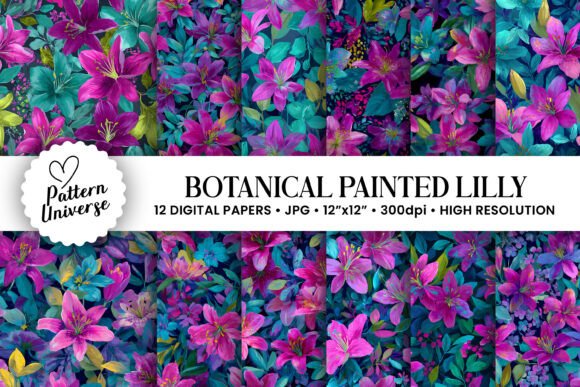
The collection typically includes twelve unique seamless patterns, all generated with AI to ensure crisp details while maintaining the artistic soul of traditional watercolor techniques. Each file is delivered in high resolution—300 DPI at 12x12 inches (3600 x 3600 pixels)—which is the industry standard for professional printing. This technical specification matters because it means you aren't limited to screen use; you can print these designs for physical products without worrying about pixelation or blurriness. When you download the zip file, you are getting a toolkit that bridges the gap between digital convenience and tangible craftsmanship.
Real-World Applications for Crafters and Small Businesses
One of the most immediate uses for these lily patterns is in the realm of gift wrapping and packaging. Imagine running a small Etsy shop selling handmade soaps or candles. Using generic, store-bought wrapping paper is fine, but it doesn't tell your brand story. By printing these botanical lily designs on cardstock or tissue paper, you create a custom unboxing experience. The seamless nature of the patterns means you can tile them across large sheets without obvious break lines, giving the illusion of a continuous garden. This attention to detail often justifies a higher price point for your goods because the presentation feels luxury and thoughtful.
For those involved in the paper crafting community, such as junk journaling and scrapbooking, these digital papers are invaluable background elements. A junk journal is all about layering textures and memories. A soft green lily pattern can serve as the base page upon which you glue tickets, photos, and handwritten notes. Because the watercolor style is inherently soft and slightly translucent in appearance, it doesn't compete with the foreground elements; instead, it frames them. You can print these at home on various types of paper—from matte photo paper to textured cardstock—to achieve different tactile feels that enhance the sensory experience of flipping through a journal.
Elevating Event Stationery and Invitations
Planning an event, whether it's a bridal shower, a baby welcome party, or a springtime garden gathering, often hinges on the aesthetic of the invitations. Botanical themes are perennially popular because they evoke freshness and growth. Using these seamless lily patterns allows you to design cohesive stationery suites. You can use one pattern for the main invitation card, a variation for the RSVP envelope liner, and another for the menu cards. The consistency creates a polished, professional look that usually requires hiring a graphic designer. However, with these pre-made high-resolution files, a beginner can assemble a stunning suite using free or affordable design software. The key here is the 300 DPI resolution; when guests hold the invitation, the print quality signals that this is a special occasion.
Tumbler wraps represent another booming niche for these digital assets. With the rise of sublimation printing, personalized drinkware has become a massive market. The curved surface of a tumbler requires a design that flows well without awkward cuts. Since these lily patterns are seamless, they wrap around the cylinder perfectly, creating an immersive botanical scene. A creator could sell a "Spring Garden" series of tumblers, using the different color variations in the twelve-pattern pack to offer customers choices ranging from deep midnight blues to soft pastel pinks. The AI generation ensures that the petals and leaves have natural variance, avoiding the repetitive, robotic look that sometimes plagues digital patterns.
Considerations Before You Start Creating
While the possibilities are endless, there are practical factors to consider before diving into your project. First, understand the difference between screen resolution and print resolution. These files are specifically optimized for print at 300 DPI. If you are using them for web graphics, such as blog headers or social media posts, you may need to resize them to keep file sizes manageable, though starting with a high-res source gives you the flexibility to crop and zoom without losing quality.
Secondly, think about the medium you are printing on. Watercolor designs often rely on the white of the paper to create highlights. If you print these on kraft paper or colored cardstock, the colors will shift and blend with the background, which can be a desirable artistic effect or a mistake depending on your goal. It is always wise to run a test print on the exact material you intend to use for the final product. This saves money on ink and materials in the long run and ensures the delicate gradients of the lily petals render correctly.
For educators and content creators, these images can also serve as gentle, non-distracting backgrounds for worksheets, presentation slides, or printable planners. The organic shapes of the lilies add visual interest to educational materials without being too loud or chaotic, helping to maintain focus while making the learning environment feel welcoming. In a digital classroom setting, these backgrounds can soften the starkness of a standard white slide, making remote learning feel a bit more human and less corporate.
Why Choose AI-Generated Botanical Art?
You might wonder why choose AI-generated patterns over traditional photography or hand-p scans. The advantage lies in the seamless repeatability and the clean isolation of the subject. Traditional photos often have complex backgrounds or lighting issues that make them hard to tile. Hand-scanned watercolors can sometimes carry dust or paper texture that doesn't match your project's needs. AI-generated assets like this botanical lily collection offer the best of both worlds: the artistic integrity of watercolor with the technical precision required for modern manufacturing and digital design. They are ready to use immediately upon download, stripping away the time-consuming process of creating the art from scratch so you can focus on the application.
Ultimately, integrating Botanical Watercolor Lily Digital Paper into your workflow is about efficiency meeting aesthetics. It allows you to produce high-volume, high-quality creative work whether you are a freelancer managing multiple client brands or a parent making birthday decorations for a child's party. The versatility of the twelve included patterns ensures that you aren't stuck with a single look; you have a palette of options to match different seasons, moods, and brand identities. By leveraging these resources, you transform simple digital files into tangible experiences that delight users, customers, and viewers alike.