Evaluating the Soft Watercolor Strawberry Pattern Collection for Organic Design Projects
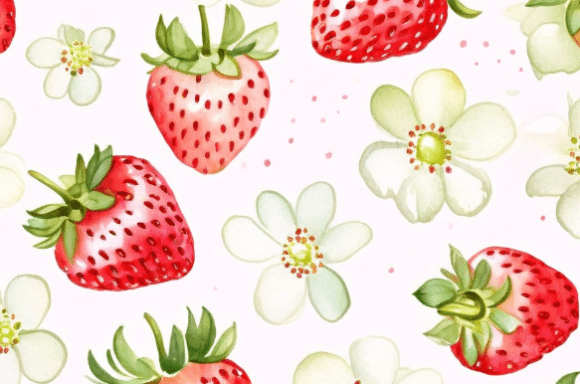
In the realm of digital and print design, the choice of visual assets often dictates the emotional resonance of a final product. For designers, stationery creators, and brand strategists targeting a demographic that values authenticity and gentleness, the Soft Watercolor Strawberry Pattern Collection presents a compelling option. This specific set of illustrations distinguishes itself through a deliberate focus on fresh strawberries paired with delicate floral elements, all rendered with soft textures and natural color palettes. Unlike high-contrast vector graphics or flat design icons, this collection leans heavily into an organic, hand-painted aesthetic that evokes a sense of lightness and cheer.
Understanding where this collection fits within the broader landscape of design resources requires a nuanced look at style, application, and technical execution. It is not merely a folder of images; it is a curated stylistic approach suited for specific narratives. This analysis explores the distinct characteristics of the collection, compares it against alternative styles, and outlines the practical scenarios where it serves as the optimal choice versus when other resources might be more appropriate.
Defining the Aesthetic: Texture and Naturalism
The primary differentiator of the Soft Watercolor Strawberry Pattern Collection is its commitment to texture. In digital design, "soft" often refers to blurred edges or low opacity, but here it implies a simulation of traditional media. The illustrations likely feature visible brushstrokes, pigment variation, and the subtle bleeding of colors that occurs when watercolor meets paper. This creates a tactile quality that flat digital art cannot replicate without significant effort.
The subject matter—fresh strawberries and florals—is executed with a focus on botanical accuracy softened by artistic interpretation. The colors are typically muted pastels, earthy reds, and sage greens rather than neon or highly saturated primaries. This restraint allows the patterns to serve as backgrounds or supporting elements without overwhelming typography or other focal points. For projects aiming to convey freshness, summer vibes, or a connection to nature, this organic feel is invaluable. It avoids the sterile perfection of computer-generated imagery, offering instead a human touch that resonates with audiences seeking warmth and approachability.
Comparative Analysis: Watercolor vs. Vector and Flat Design
When evaluating design assets, professionals often weigh watercolor collections against vector-based alternatives. Each format offers distinct advantages and tradeoffs depending on the project requirements.
- Scalability and Editing: Vector graphics are mathematically defined, allowing for infinite scalability without loss of quality. They are ideal for large-format signage or logos that must remain crisp at any size. In contrast, the Soft Watercolor Strawberry Pattern Collection, being raster-based (pixel-based), has resolution limits. While high-resolution files suffice for most print and web uses, they may pixelate if enlarged beyond their native dimensions. Furthermore, editing individual color layers in a watercolor scan can be more complex than recoloring a vector shape.
- Emotional Impact: Where vectors excel in clarity and modernity, they can sometimes feel cold or corporate. The watercolor approach excels in evoking emotion. The irregular edges and blended hues create a dreamy, nostalgic atmosphere. If a brand identity relies on feelings of comfort, artisanal quality, or handmade care, the watercolor style often outperforms the clean lines of flat design.
- Integration Complexity: Integrating flat icons into a layout is straightforward due to their solid backgrounds or transparent paths. Watercolor elements often have soft, feathered edges that require careful handling when placed over busy backgrounds. Designers may need to use masking techniques or ensure sufficient contrast to maintain legibility.
Ultimately, the decision between these styles is not about which is "better," but which aligns with the project's tone. For a tech startup dashboard, vectors are likely superior. For a boutique bakery's packaging or a wedding invitation suite, the soft watercolor aesthetic is frequently the stronger contender.
Ideal Use Cases and Application Scenarios
The versatility of the Soft Watercolor Strawberry Pattern Collection makes it suitable for a wide array of creative endeavors, particularly those within the lifestyle and consumer goods sectors. Its light and cheerful nature makes it a natural fit for:
- Stationery and Paper Goods: This is perhaps the most intuitive application. Greeting cards, journals, planners, and scrapbooking materials benefit immensely from the hand-painted look. The texture adds depth to physical paper products, enhancing the perceived value of the item.
- Packaging Design: For organic food products, herbal teas, skincare lines, or artisanal jams, packaging that features natural illustrations can signal ingredient quality and eco-friendliness. The strawberry motif specifically suggests flavor and freshness, making it ideal for food and beverage branding.
- Digital Content and Social Media: In an era where digital fatigue is real, soft, organic visuals can stop the scroll. These patterns work well as background overlays for Instagram stories, blog headers, or email newsletter templates, providing a cohesive visual theme that feels inviting rather than aggressive.
- Textile and Surface Pattern Design: When applied to fabrics for clothing, home decor, or tote bags, the repeating nature of pattern collections shines. The soft transitions in watercolor designs often translate beautifully to fabric prints, avoiding the harshness that some digital repeats can exhibit.
Limitations and Decision Factors
While the collection offers significant aesthetic benefits, it is crucial to recognize its limitations to avoid misapplication. Designers must evaluate whether the specific constraints of their project align with the attributes of watercolor art.
Resolution Constraints: As mentioned, raster images rely on DPI (dots per inch). If a project requires massive scale, such as a billboard or a trade show backdrop, the source files must be checked for sufficient resolution. Upscaling low-res watercolor scans can result in blurriness that destroys the delicate texture intended by the artist.
Color Consistency: Watercolor is inherently variable. If a brand requires strict adherence to specific Pantone colors for logo consistency, the natural variations in a watercolor strawberry might pose a challenge. While filters can adjust hues, they may also degrade the subtle texture that makes the art appealing. In such cases, a custom vector illustration based on the watercolor style might be a necessary intermediate step.
Legibility Concerns: The "soft" nature of these patterns means they lack hard boundaries. Placing text directly over a dense area of the pattern can reduce readability. Effective use often involves creating negative space or using solid color blocks behind text to ensure clarity. This requires a slightly more sophisticated layout approach compared to using simple geometric patterns.
Making the Final Choice
Selecting the Soft Watercolor Strawberry Pattern Collection should be a strategic decision based on the desired user experience and brand narrative. If the goal is to project modernity, efficiency, and technological precision, this collection is likely not the right tool. However, if the objective is to foster a connection through warmth, nature, and artisanal charm, it is an exceptional resource.
Professionals should consider the end medium early in the selection process. For digital-only projects with strict file size limits, optimized web versions of these assets are essential. For print, ensuring access to high-resolution TIFF or PNG files is non-negotiable. Additionally, consider the longevity of the trend. While watercolor has remained a staple in design for years, specific motifs like strawberries can lean seasonal. To maximize the investment, look for ways to use the floral elements independently or combine them with neutral tones to extend their usability beyond the summer months.
In conclusion, this collection represents a specialized tool in the designer's toolkit. It bridges the gap between digital convenience and traditional artistry. By understanding its strengths in texture and emotional appeal, while respecting its technical limitations regarding scalability and color precision, creatives can leverage these assets to produce work that feels both professional and deeply human. The key lies in matching the medium to the message: when the story is one of natural beauty and gentle freshness, the soft watercolor approach remains unmatched.